Project Spore was born from a fairly simple reason: I wanted to spend my day being busy.
Not busy in a grand, hyper-productive sense. Nor was it because I started with a polished business plan, complete with growth charts and overconfident investor presentations.
I just wanted to make something. A small digital object that I could dismantle, reassemble, polish, and then break down again whenever a part felt slightly off. In this process, I wasn’t exactly working alone. I had my “LLM team”: a collection of AI-based assistants who helped think, write code, organize structures, test layouts, and occasionally made me feel like I was running a small studio where the team members never asked for coffee.
From that initially simple process, Project Spore slowly found its form.
What is Project Spore?
Project Spore is a starter theme for Hugo, designed as a starting point for anyone who wants to build a personal blog, a digital garden, or a small writing space on the web.
I imagined it not as a massive, feature-heavy theme, but as a seed. Something light enough to plant, neat enough to develop, and subtle enough not to distract from the user’s thoughts.
Spore doesn’t try to be a finished forest. It simply tries to be a comfortable beginning.
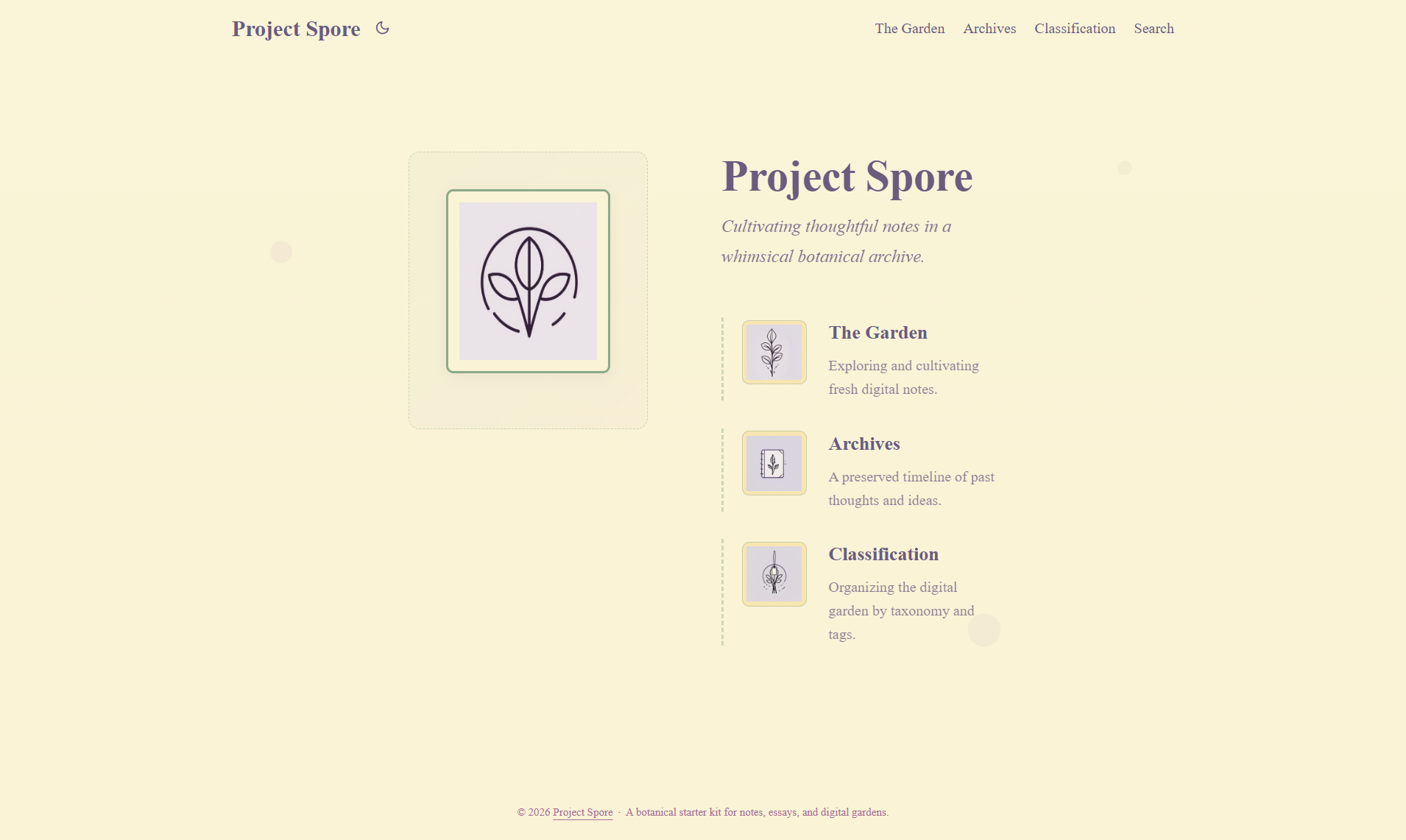
homepage
Why the Name “Spore”?
The name “Spore” felt right because this project wasn’t born as a grand structure. It is more like a tiny organism carrying vast possibilities.
Spores don’t look impressive at first. They are small, easily overlooked, and quiet. But in the right conditions, they can grow into something much wider. I wanted this theme to have that exact feel: simple when first installed, but flexible enough to evolve alongside its owner.
For some, it can be a blog. For others, it can be a digital garden. For someone learning to write, think, or document their creative process, it can be a small space to start organizing their mind.
Built with an LLM Team
One of the most interesting parts of Project Spore is the making of it. I built it with the help of LLMs. Not in the sense that I just pressed a button and everything was done. The process remained messy, experimental, and sometimes absurdly frustrating.
There were parts that needed to be tested over and over. There was CSS that looked right on one page but turned into a wild creature on another. There were layouts that initially felt elegant, but upon closer look, felt like a study desk cluttered with lab report drafts.
In this journey, the LLMs acted like a small team—sometimes a programmer, sometimes a reviewer, sometimes a documentation editor, and occasionally just a partner to unravel problems caused by my own reckless habit of changing too many things at once.
This project made me realize that AI doesn’t always replace the creative process; in my case, it actually made the process feel more accessible. I still had to choose the direction. I still had to judge the visual feel. LLMs helped accelerate the pace, but they didn’t take the wheel.
Design Focus
Visually, Project Spore is directed to feel light, calm, and editorial. The main focus remains on readability, structure, and atmosphere.
Key focal points:
- Clean and minimal layout
- Responsive design across devices
- Simple yet functional navigation
- A comfortable reading space for long-form thoughts
- Easy-to-understand content structure
- Soft visual nuances without losing character
Project grew from Musnotes’ own aesthetic, but it doesn’t have to end up as a Musnotes clone. Rather, I want Spore to be a foundation that others can reshape to fit their own needs.
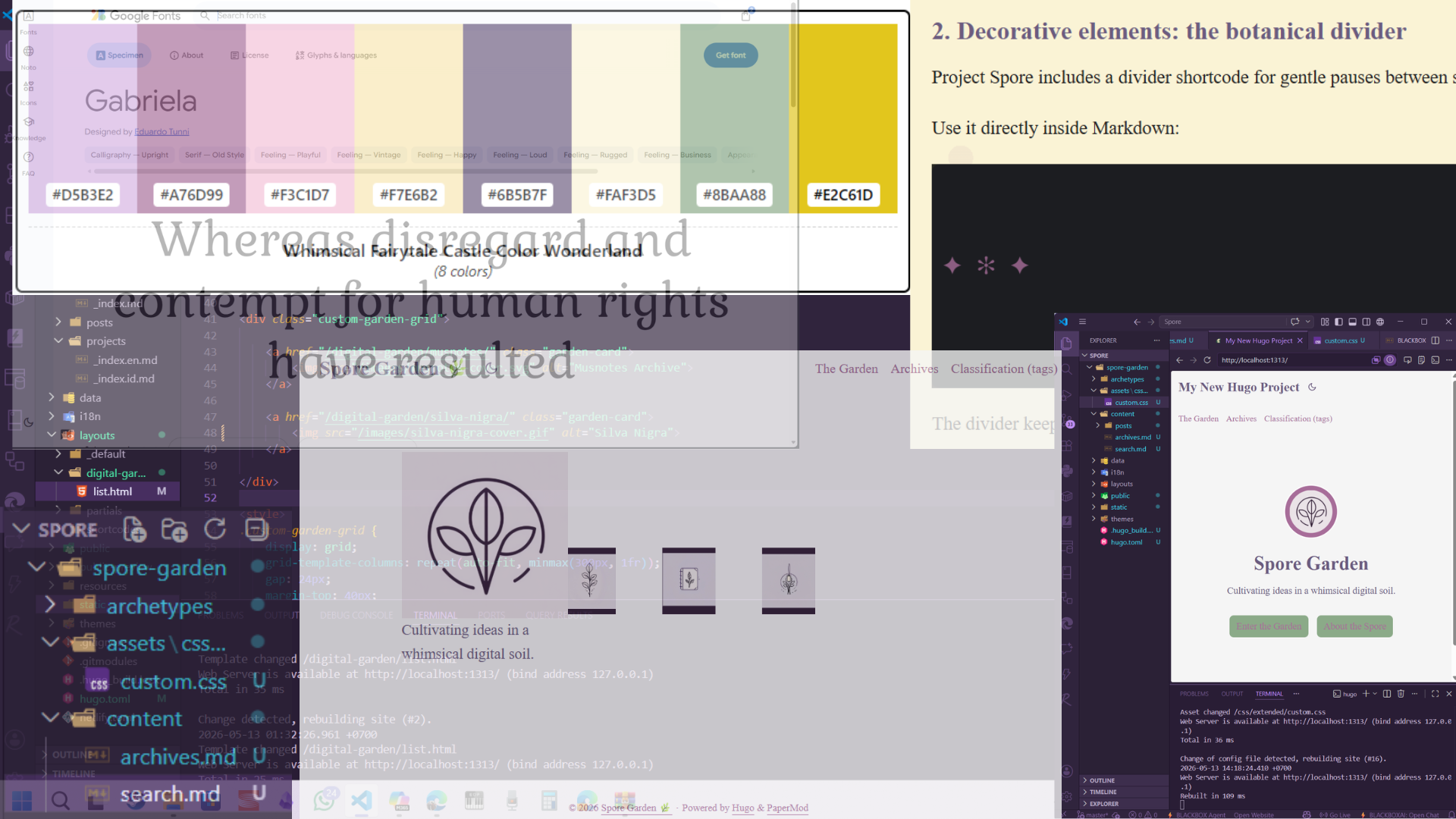
spore-process
Who is it For?
Project Spore might be suitable for people who want to have a personal blog without too many distractions. It’s also fit for students, writers, note-takers, beginner developers, or anyone who wants to build a small space on the internet without having to start from a completely blank page.
I don’t want to sell it as a magic solution. Spore won’t automatically make someone write more consistently, but it can help provide the place. And sometimes, to start making something, a comfortable enough place is already half the battle.
Project Status
As of this writing, Project Spore has been released as a digital product. However, for me, it isn’t truly “finished.” There will always be parts to tidy up, documentation to clarify, or small features to add without losing its simplicity.
| Category | Information |
|---|---|
| Status | Released |
| Platform | Gumroad |
| Link | Project Spore on Gumroad |
| Demo | View Project Spore Demo |
| Repository | GitHub Repository |
Closing Notes
Project Spore isn’t the biggest project I could ever build. But it is significant because it marks the moment I dared to create something that others could touch, rather than keeping it tucked away in local folders or private drafts.
It was born from a day when I just wanted to be busy. And from that busyness, a small seed emerged. For now, that is enough.